Showing posts with label home made. Show all posts

Saturday, April 14, 2012

Home Dairy

 . ricotta .

 . yoghurt .

. 'butter' .

I dream about the day I have a steady supply of fresh milk at my fingertips. I first learnt to milk a cow when I was on holiday in Chile. I have an aunty who is renowned for her fresh, white cheese. I remember her making it when I was a child and was still doing so
when I went back in 2007.  People come by the farm to pick it up, she makes and sells it daily.

Whether I ever will have my own cow, or a herd share, is yet to be revealed.  But I love the idea, even though it's quite a commitment. For the meantime I will live vicariously through books such as The Dirty Life and blogs such as Longest Acres.

I will also treasure the affordable supply of raw milk that I've been able to receive recently. This happy situation unfolded just at the time that the book Home Dairy arrived on my doorstep.
It has meant that we can master familiar recipes like Paneer and Yoghurt while experimenting with a whole bunch of other things, starting with Ricotta and 'butter' (more like whipped butter).
It is humbling to embark on such experiments and realise just how much time and milk goes in to making the final product. But you can't beat the satisfaction that accompanies this process either. Buttermilk pancakes with homemade butter, ricotta and local honey. Yes please!


 . breakfast time .

 . and I couldn't resist adding a photo of
 the eggs from our lovely ladies.


Thursday, March 15, 2012

Making your own muesli (granola)

One of the best ways of saving money and having control over what you eat is by making your own cereal. After searching the aisles of supermarkets and natural food stores alike, I struggled to find a breakfast cereal that was just what I wanted. They all had either too much fat or too much sugar. None that was "just right"...hehehe. So I decided to make my own.


I'm a toasted muesli girl (or 'granola', for American readers) so that's what I chose, but you can make a wide range of cereals very cheaply. The easiest would be natural muesli (untoasted muesli). Just get your hands on some good quality rolled oats and mix it with any dried fruit, nuts, seeds and spices. You can add anything you like. There's plenty of recipes online but just go with what your taste buds tell you. 

The natural bulk foods store I shop at has a really good range of puffed, flaked and rolled grains. You can make a lighter option if you don't like muesli by just blending these with some fruit and nuts or seeds. There's some pretty protein packed grain options available (like quinoa flakes).

My favourite is a toasted muesli though. I don't really have a recipe, I just use what I have on hand. My most recent blend was rolled oats, coconut, almonds, apricots, cinnamon and honey. It's like a big bowl of sunshine in the morning. The basic guide is below, but really, it's hard to go wrong here. Start experimenting!

My muesli blend
all measurements are guestimates

6 cups rolled oats
2 cups shredded coconut
1 cup raw almonds, roughly chopped
1/2 ts cinnamon
1/3 cup brown sugar 
1 tb rice bran oil (any oil would do, olive is apparently nice)
1/2 cup water
2 tb honey
1 ts vanilla extract
1 cup dried apricots, diced

Mix the first four ingredients in a bowl. I like chunky bits (the ad companies call them 'clusters') in my muesli so I do a little trick where I put a cup of these dry ingredients in the food processor and pulverise them then mix in with the rest. 
Heat the next five ingredients until the sugar has dissolved. Stir the wet ingredients into the dry ingredients. Spread out on a lined tray (probably two trays) and bake on a low heat 'til lightly browned. If you like a muesli without clumps, stir the muesli as it cools. If you like clusters, don't stir. I add my fruit after the muesli has cooled. If you like your fruit super chewy, you can bake it in with the muesli. Store in an air tight container when completely cool. Lasts for about a month.

Friday, March 2, 2012

Food swap day planning

I've decided on the day for the food swap (March 25, three weeks away) and I've started making plans. The invites are sent (virtually) and I've begun the difficult task of making a list of what to make... So many options! This is the perfect opportunity to try out some new recipes. I often get overwhelmed with too many cookies or too much bread when I bake (good problem to have), a food swap allows you to have a little bit of everything. I can't wait to try what the other swappers bring too. It's a little bit like the best country fete/fair but everything is free!


So far, my list looks something like this:
pesto - my summer basil needs a trim
mini pies - there's some tasty apricots down at the green grocer
biscuits - too many options, but maybe these from 101 Cookbooks
jams - I have some rhubarb and vanilla bean jam I made earlier
salted caramel sauce - this looks amazing!


I better not get carried away though... What would you bring to a food swap?

Monday, January 23, 2012

Food swap

I've been thinking about having a food swap day for a long time. I think February is the month it is finally going to happen. A food swap can be as organised or relaxed as you like. It can be as simple as a table where people place the food they've made/grown and want to share and anyone can take whatever they want. Or it can be structured, using cards where people can offer a swap for each item (using swap sheets with categories What, Who and Offers). Then the maker can choose what 'payment' they want for their product. I'm kind of excited about this! I'll keep you posted on the planning.


Community swapping and sharing is starting to gain momentum in Australia. Yesterday I read an article about home grown produce sharing in Melbourne and surrounds. It sounds like a great idea, one I'd love to get started here. It's just another way of developing community sufficiency, instead of being too worried about complete self sufficiency. Do you have anything like this near you?


Tuesday, December 20, 2011

Food...and where it comes from

I think about food a lot. Cooking it, eating it, growing it. But I also think about where it comes from. Not just the store but the real source of what I'm eating. I'm always trying to find the best option which meets my financial and moral (and taste) needs. I ask myself questions such as: "Is it better to choose an organic product from overseas or a local non-organic product?" or "What about when the quality of the imported product is higher (like with Italian canned tomatoes) and the product is so much cheaper?". I have to weigh these concerns against a tight budget of both time and money. I think these are pretty common limiting factors for many of you. 


Over this past year my partner (Andy) and I have been discussing our food choices in fairly serious ways. We'd been slowly reducing the amount of pre-made food we purchased and our food bills had dropped significantly. We did this by replacing things such as tortillas, bread and pasta with home made versions and buy simply limiting the amount of 'junk' food we purchased. The majority of our shopping is now for the ingredients to make food instead of ready made food. We can also afford to purchase more organics and high quality products. When we see shelf-stable products on special we purchase multiples and stockpile. We also signed up for our local Community Supported Agriculture group Food Connect. Food Connect provides subscriptions of fruit and vegetables sourced from local, sustainable, chemical free or organic growers and gives a fair price to the farmer (approximately 40% of the sale price compared to 4-6% the large chains offer). The food is great and it has put us back in touch with the seasons and the effect weather can have on food production. 


We also spoke about meat. I'm a vegetarian and have been all my life. Andy has always eaten meat, and was raised in a meat-and-three-veg family. He has reduced his meat consumption since we've been together. I don't think this is due to any sort of guilt tripping from me (I hope!) but because of the tasty vego food we make together. Andy has also learnt more about nutrition and so understands appropriate portion sizes for meat better now. We like the idea of 'meat as a treat' - choosing great quality, free-range or organic meat and paying more for it but buying less. As the quality is higher, you need to use less and having it less often makes you appreciate it more. 


In the past I have been an active dumpster diver. I have collected food from bins all over Brisbane. When you start doing this it can really shock you. The quality of the food is amazing but the quantity is the really shocking thing. One of my regular haunts regularly had half a dozen wheelie bins full of fruit and veg on every visit. The photo below is a selection from one night's diving. There would have been 10 times that amount left after we were finished. It is estimated that we throw out over $6 billion of food a year from Australian households...I'd hate to think what the value for retail stores and restaurants would be.


I dumpster dive less since signing up for Food Connect. I'm not against diving any more, I still stand by the reasons I started doing it in the first place (namely, reducing the amount of food going to landfill) but we get enough food from our subscription. I also like that I'm supporting the farmers and hopefully making small steps to change. This is the reason I've always struggled to wholly support the freegan idea. I don't think we can see change unless we support those attempting to produce better products. Choosing to not spend at the large chain stores is one thing but neglecting the little guys trying to make a difference as well doesn't create change. 


Since reducing my dumpster diving nights (or possuming, as I like to call it - after overhearing some packing staff say "Here come the possums" one night), I've been looking into some ways others are working on the supermarket food waste problem. I was glad to see a post on one of my favourite blogs about this here. Tricia gave some great links to charities and groups working to redistribute the food before it gets sent to landfill. 


I guess this whole (rather long) post is about making the choices that are right for you. You can only work within your limits of time and money. Research your food and make active choices about what you buy. You'll feel better for it!  

Thursday, October 6, 2011

BOGI Fair

Last Sunday Kate, Mel and I headed out to Albion for the annual Brisbane Organic Growers Fair. This is our third fair. I really look forward to these events. They're a great opportunity to talk to people who are all involved in really interesting aspects of food production, education or community development. And it's also the perfect time to pick up some new plants and tasty things to eat.


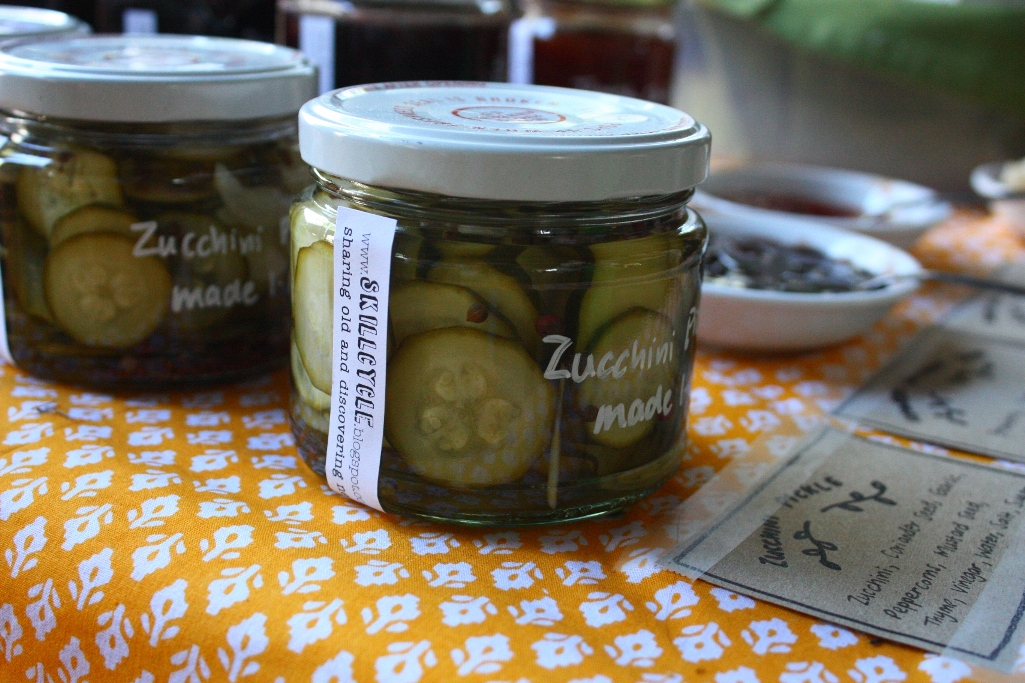
Mel and I made some preserves (Strawberry Balsamic Jam, Tomato Jam and Old Fashioned Zucchini Pickles) and organic potato and onion soup with home made bread to sell. Kate was a baking demon and put my little loaf to shame with a massive bag of her own bread. 


Because she's so hardcore, Kate also brought her popular Rosemary Crackers (they always sell out fast...maybe she'll post her recipe here one day...and some time saving pointers she learnt the hard way) plus her home grown herbs. 


Kate also brought along some dried culinary lavender. This stuff is very useful. She discusses it here.


Everything sold really well. I love how the community comes along to these days to learn something new and support local growers and makers. I always leave with new ideas and a big grin, definitely an inspiring day. I'll post again soon about some of the people I spoke to and the amazing things they're doing.